Read the full report to explore the models, case examples and ready-to-use checklists.
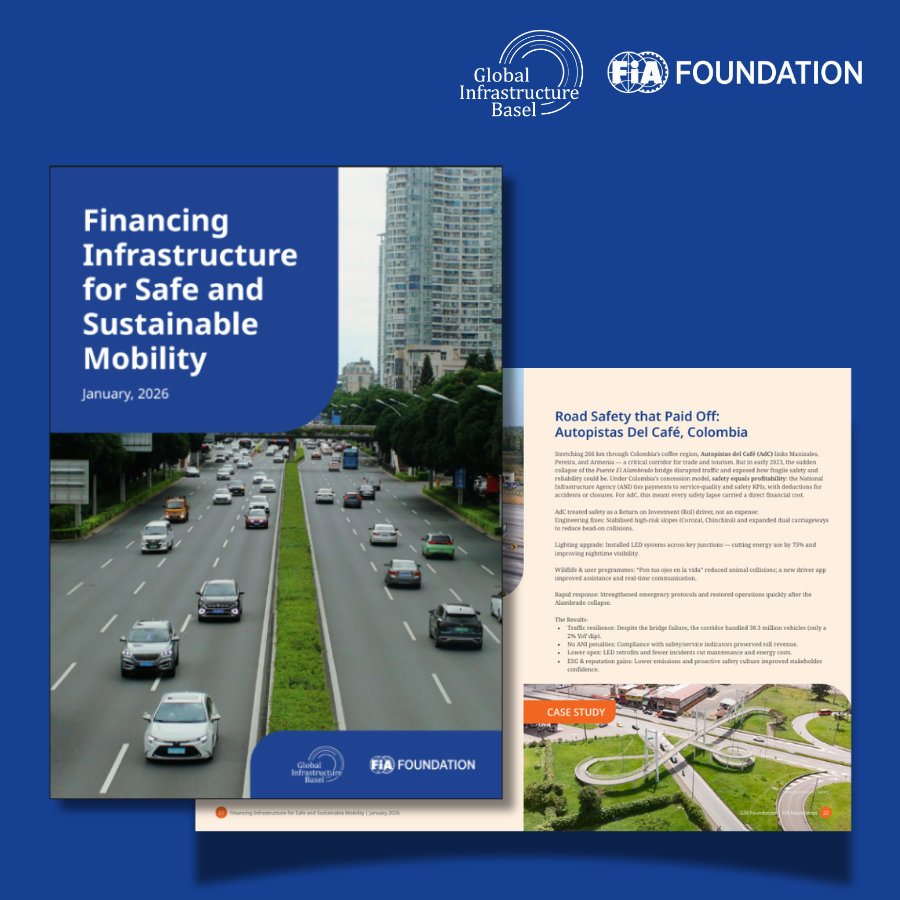
Today, GIB and FIA Foundation publish the report title: "Financing Infrastructure for Safe & Sustainable Mobility"—a practical guide for governments, investors and operators on how to move road safety from a ‘nice to have’ to a core driver of financial value.The report shows, in clear terms, how safety built into design, contracts and financing can protect lives whilst strengthening the financial performance of roads and mass transit systems.
Why it matters
- Safety is a performance issue. Fewer crashes mean fewer closures, lower liability and more reliable operations—benefits that investors and road users feel immediately.
- Capital follows contracts. When tenders and PPPs include measurable safety requirements, money flows to projects that deliver both social and financial outcomes.
- Aligns with climate and equity goals. Safer access to public transport and active travel improves inclusion, reduces emissions and builds trust.
What’s inside the report
- Evidence linking safety to investment performance in both toll roads and mass transit.
- Two investment archetypes—Bus Rapid Transit (safer station access) and toll roads (reliability-first safety packages) — demonstrating positive returns of investment in safer / more accessible assets.
- Legal levers to embed safety in public–private partnerships: outcome-linked payment mechanisms, clear KPIs and independent verification.
- Innovative financing tools such as sustainability-linked instruments, outcome-based structures and securitised notes for road agencies.
- A concise call to action for asset owners, lenders,governments and insurers to standardise safety metrics and reporting.
Who should read it
- Infrastructure equity investors and lenders seeking better risk adjusted returns, impact-positive portfolios.
- Transport ministries, transport procurement agencies and municipal leaders preparing new corridors or PPP programs.
- Operators and contractors looking to streamline O&M costs by reducing incidents, claims and downtime.
Safer roads are not just a moral imperative—it is a driver for financial value.
Read the full report to explore the models, case examples and ready-to-use checklists.

.jpg)

.jpg)