Event Insight
What Climate Week NYC 2026 Revealed About Financing Climate Resilience
November 3, 2026

Climate change is an increasingly tangible reality, creating risks that remain inadequately accounted for in global markets. Sustainable development depends on understanding the origins of these risks, exploring how capital can support recovery and reconstruction, and shaping what gets built in the aftermath of climate-related losses.
On 23 September 2026, the Global Infrastructure Basel Foundation (GIB) and FAST-Infra Label joined Swissnex, the Consulate General of Switzerland in New York, Swiss Business Hub USA, and Greater Zurich Area to co-organise From Risk to Opportunity: How Capital Can Enable Climate Resilience at Climate Week NYC. Held as part of the Assembly, the main Swiss stage at Climate Week NYC, the event brought together professionals from insurance, investment, development finance, policy, research, and infrastructure to explore how capital can support communities facing growing climate risks.
Across three panel discussions, speakers explored the challenges of insuring climate-exposed assets, financing resilient infrastructure, and turning investment commitments into projects that can be delivered on the ground. Here you can find the highlights:
Climate risks affect more than the physical condition of infrastructure. They can disrupt essential services, increase financial exposure, and leave communities struggling to access insurance or recover from extreme weather. Opening the event, Felix Baumann, Consul General of Switzerland in New York, made the economic case for investing in resilience:
"The more we invest in resilience, the less we will have to invest afterwards in much more costly reconstruction efforts."
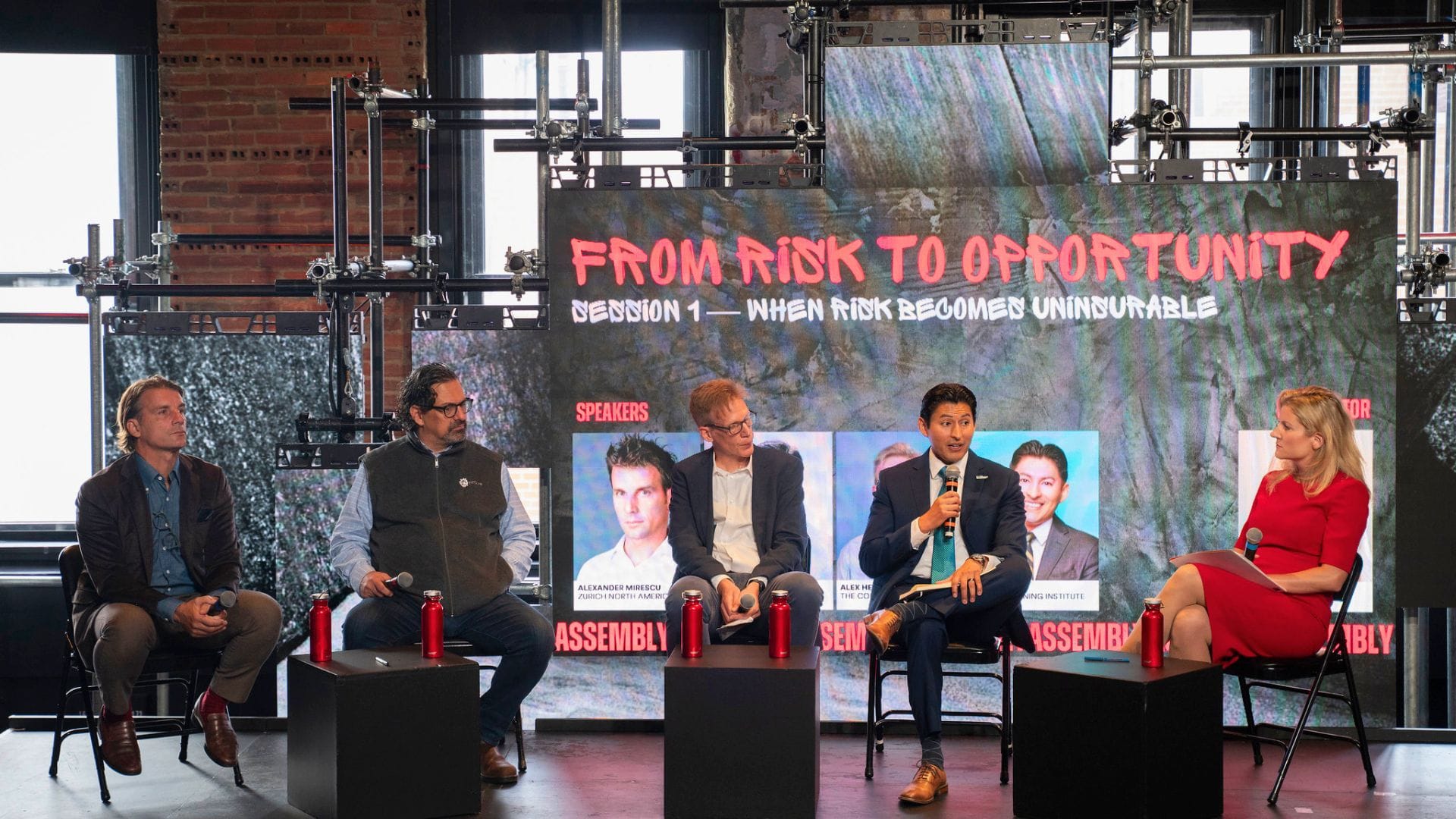
The first panel discussion, When Risk Becomes Uninsurable, brought together Alexander Mirescu, Head of Extreme Weather, Zurich North America; Charlie Sidoti, Executive Director, InnSure; Alex Heil, Senior Economist, The Conference Board; and Natalia Moudrak, Founder, Resilience Table.
The discussion explored how climate risks can affect the insurability and financing of infrastructure, highlighting the need to assess these risks early in the investment process. Panellists emphasised that communities already facing the effects of historical disinvestment are often more vulnerable to these challenges, with fewer resources to protect their homes and livelihoods. They also highlighted the importance of integrating climate risk assessments into infrastructure planning and investment decisions, from site selection and design to long-term maintenance. Access to better climate data and risk assessments can help investors and public authorities anticipate potential impacts and make more informed decisions.
Financing infrastructure is only part of the challenge. Projects also need to respond to the people who depend on them, particularly those most exposed to climate risks.
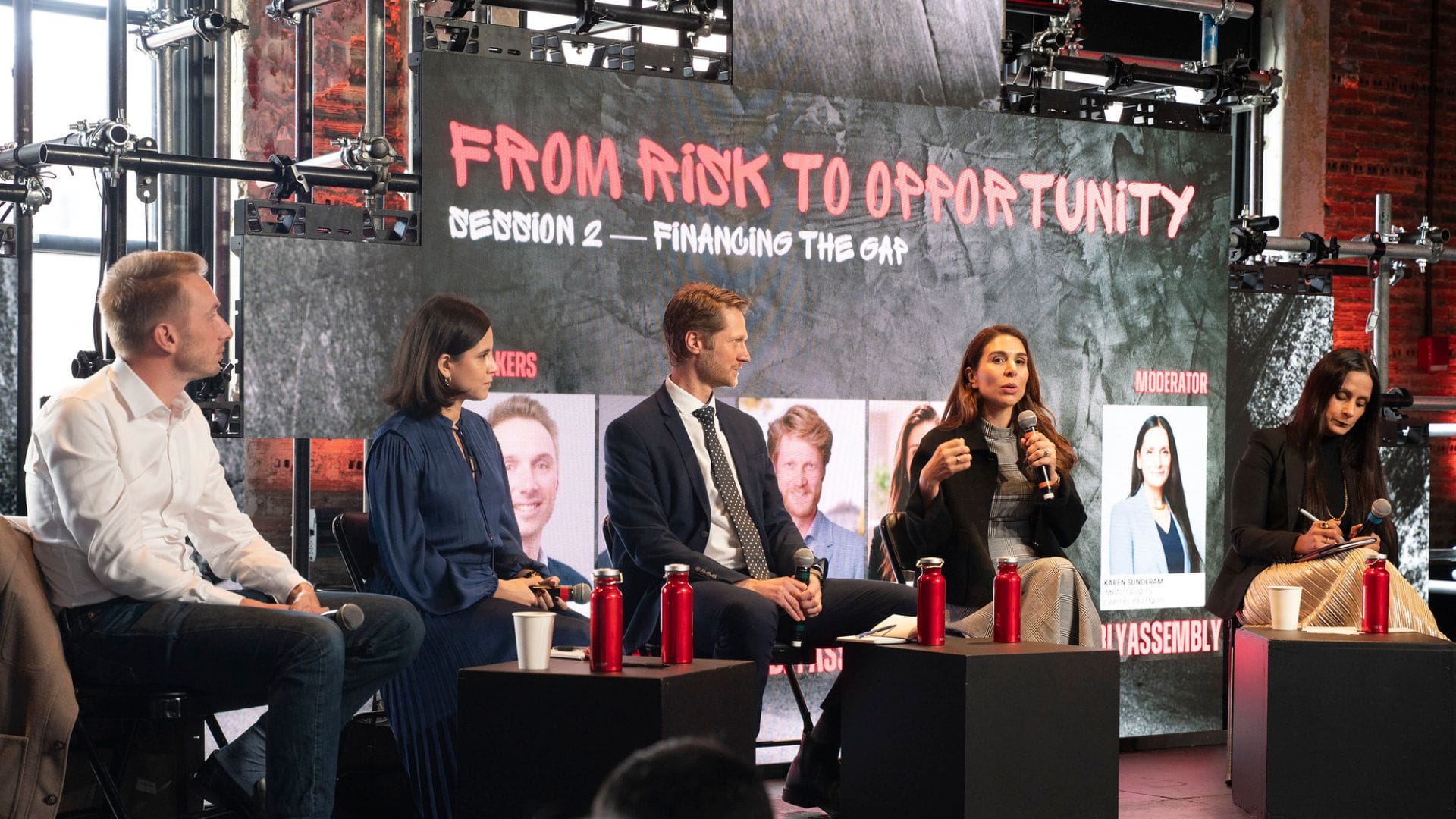
The discussion on Financing the Gap, the second panel of the event, brought attention to the challenges of mobilising capital for climate-resilient infrastructure. Featuring Thomas Giroux, Professor, ETH Zurich; Adriana Becerra Cid, Sustainable Investment Manager, Lombard Odier Investment Managers; Louis Downing, CEO, Global Infrastructure Basel Foundation; and Karen Sunderam, Investment Strategist, ImpactAssets Capital Partners, the panel explored the barriers that prevent capital from reaching these projects and the financing approaches needed to address them.
Panellists highlighted the importance of aligning financial mechanisms with the practical realities of project development and implementation, taking into account local needs, project-specific risk profiles, and investment timelines. They also discussed how investment structures can better support projects through different stages of development and help mobilise capital at scale.
Adriana Becerra Cid emphasised the importance of involving communities in defining solutions:
"The community should be included for us to understand what is really needed, what is the solution that they want, what is the actual problem, instead of deciding for them."
Louis Downing, CEO of Global Infrastructure Basel Foundation, emphasised the importance of bringing people from different disciplines together around a shared understanding of the infrastructure they are building and the communities it will serve:
"We need to be speaking the same language across all the different disciplines who are involved in creating these catalytic structures and also assets, the infrastructure that we’re building with the capital that we’re trying to mobilise."
The discussion also highlighted the need for patience when financing real-economy projects, which often require longer investment horizons. Blended finance, guarantees, and other mechanisms can help address specific risks and make projects more viable, provided they are designed around the needs of each context.
Even when capital is available, projects can struggle to move from plans to implementation. Political uncertainty, complex permitting processes, grid connection delays, fragmented responsibilities, and limited local capacity can all stand in the way. The third panel discussion, From Capital to Implementation, Nathalie Moral, Founding Partner, VitaminºC; Annika Brack, Head of Global Political Affairs, Hitachi Energy; Andrew Fishbein, Lead, Government Affairs, North America Climeworks; Judy Huynh, GIS & Data Analyst, Rebuild by Design focused on the practical conditions needed to turn investment into infrastructure that can be built, maintained, and adapted over time. Speakers highlighted the importance of coordination among investors, public authorities, project developers, and communities. Clearer project pipelines and stronger local capacity can help address implementation barriers, while meaningful community engagement can build understanding of the risks that infrastructure is designed to address. Communicating flood risks in ways that relate to everyday life can help people understand what is at stake and how proposed interventions may affect their communities.
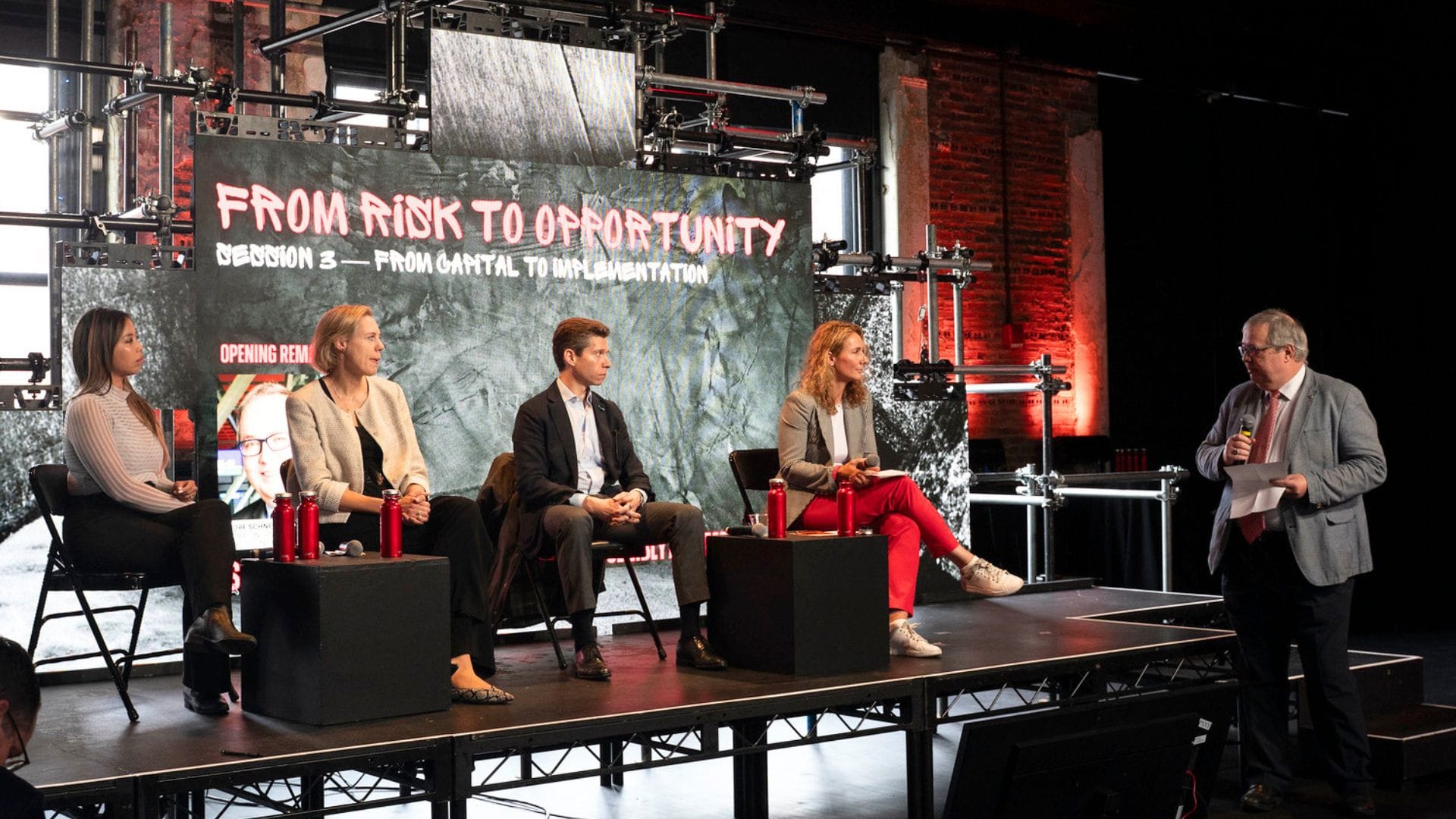
The challenges of translating infrastructure investment into on-the-ground outcomes formed the focus of the third panel discussion, From Capital to Implementation. Featuring Nathalie Moral, Founding Partner, VitaminºC; Annika Brack, Head of Global Political Affairs, Hitachi Energy; Andrew Fishbein, Lead, Government Affairs, North America, Climeworks; and Judy Huynh, GIS & Data Analyst, Rebuild by Design, the discussion examined the practical barriers that can prevent funded projects from moving into implementation. These include political uncertainty, complex permitting processes, grid connection delays, fragmented responsibilities, and limited local capacity.
Panellists emphasised the need for stronger coordination among investors, public authorities, project developers, and communities. Clearer project pipelines and stronger local capacity can help projects progress, while meaningful community engagement can build public understanding of the risks infrastructure seeks to address. The discussion also highlighted the role of effective risk communication, particularly in making issues such as flood risk more tangible and relevant to people's everyday lives.
André Schneider captured the importance of infrastructure delivery:
"Raising capital is actually meaningless if you cannot deploy it in sustainable, durable, bankable assets."
This also means looking beyond initial construction costs. Maintenance, adaptation, and site selection all influence whether infrastructure continues to provide essential services as climate conditions change. As Felix Baumann noted in his opening remarks, investing in resilience can reduce the much higher costs associated with reconstruction after disasters.
The discussions at Climate Week NYC 2026 highlighted the connections between risk assessment, financing, implementation, and community needs. Progress depends on bringing these considerations together throughout the infrastructure investment process, rather than treating resilience as an additional consideration once projects are already underway.
For GIB, this is central to advancing sustainable, resilient, and regenerative infrastructure. Infrastructure investment has the potential to help communities navigate climate challenges while contributing to a safe, equitable, and thriving society. Realising that potential requires projects that are financially viable, responsive to local needs, and designed to deliver value over the long term.