Infrastructure &
Quality and Finance
Climate-Proofing Infrastructure in Northwest Croatia
Technical assistance to REGEA to enhance climate-proofing of infrastructure in Northwest Croatia.
1st October 2025 - 31st January 2026
Zagreb, Northwest Croatia
Funded by the European Commission under the Cohesion for Transitions (C4T) Initiative.
The Technical Assistance to REGEA strengthens the capacity of the Regional Energy and Climate Agency of Northwest Croatia to ensure that future infrastructure investments are climate-resilient and compliant with EU climate policy. The project is carried out under the Cohesion for Transitions (C4T) initiative of the European Commission and focuses on developing practical tools that make climate-proofing a routine part of investment planning in Croatia.
REGEA serves a large region covering the City of Zagreb and three surrounding counties and has played a pivotal role in advancing sustainable energy and climate strategies since 2008. With the introduction of Croatia’s Climate Change and Ozone Layer Protection Act, climate-proofing has become a legal obligation across sectors. This technical assistance responds directly to that need by upgrading REGEA’s existing methodology and aligning it with European requirements for the 2021–2027 programming period.
The project introduces standardized approaches for climate risk assessment, cost estimation of adaptation measures, and integration into project appraisals and spatial planning. Through pilot applications on selected infrastructure projects, REGEA will test and demonstrate the methodology in practice, showing how climate risks can be quantified and addressed early in the project cycle.
In parallel, a comprehensive training and knowledge-transfer programme will enable REGEA to act as a national multiplier—helping cities, counties, and managing authorities across Croatia to adopt the upgraded approach. Ultimately, this initiative contributes to a more resilient, forward-looking infrastructure system that supports sustainable regional development and compliance with EU Cohesion Policy.



As part of the Cohesion for Transitions (C4T) initiative, the Global Infrastructure Basel Foundation (GIB) provides technical expertise to strengthen the analytical backbone of REGEA’s upgraded climate-proofing methodology. GIB’s role focuses on embedding quantitative and reproducible approaches that make climate risk assessment and costing more rigorous and actionable.
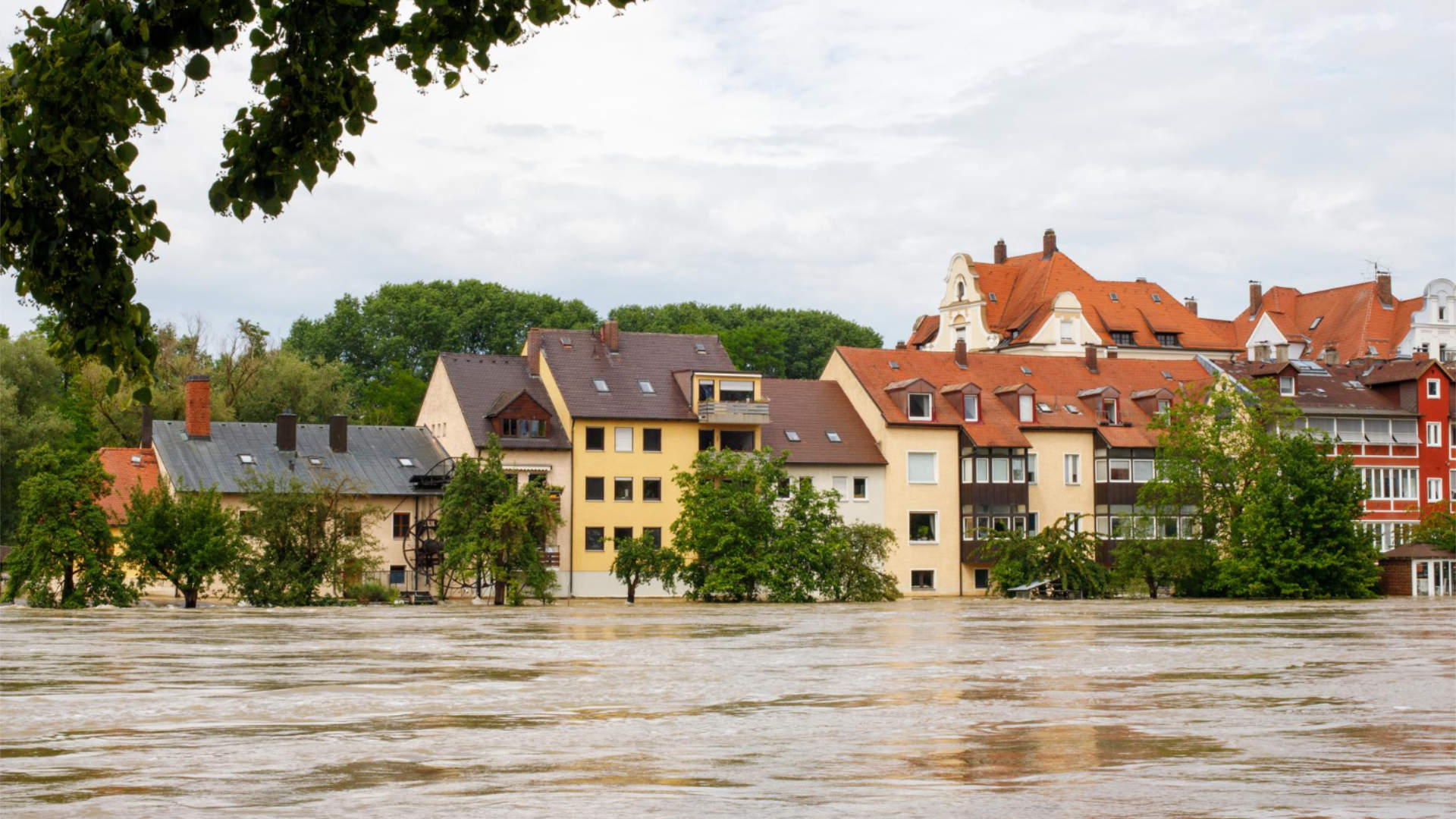
Specifically, GIB is developing a step-by-step methodology for generating climate hazard maps and applying damage functions that estimate potential losses for different types of infrastructure. This enables the translation of hazard data—such as precipitation intensity, depth of inundation, and return periods—into measurable financial and physical impacts. The methodology builds on both open-source and national meteorological data, including high-resolution precipitation series for the Zagreb region, and can be adapted for use in other parts of Croatia.
GIB also provides guidance on integrating these analytical outputs into cost-benefit analysis (CBA) frameworks and investment decision-making tools. The approach ensures that adaptation measures are not only technically justified but also economically sound, reflecting avoided damage and lifecycle benefits.
In parallel, GIB supports REGEA in documenting the process in a replicable manual, complete with data requirements, stepwise procedures, and uncertainty treatment. This will allow REGEA and other Croatian institutions to reproduce hazard maps and risk assessments using consistent datasets and parameters.
Through this contribution, GIB helps operationalize a methodology that links scientific data, cost estimation, and policy compliance—creating a bridge between analytical rigour and practical application. The result is a climate-proofing framework that can guide investment decisions at both regional and national levels, strengthening Croatia’s resilience to floods and other climate hazards.






.jpg)
.jpg)
.jpg)
.jpg)